Good Agricultural Practices Start with Ocean Mist's Farming & Post-Harvest Practices
Food Safety <
Ocean Mist's Farming & Post-Harvest Practices Shot
 

Farming & Post-Harvest Practices

 
Farming
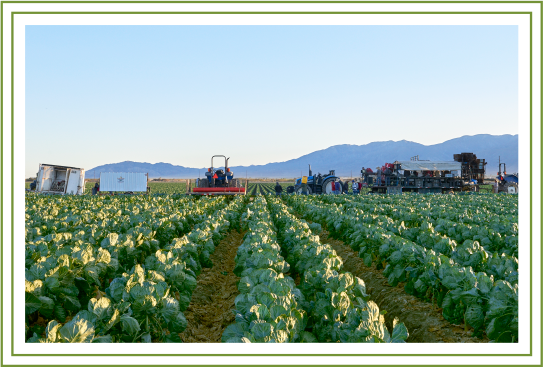
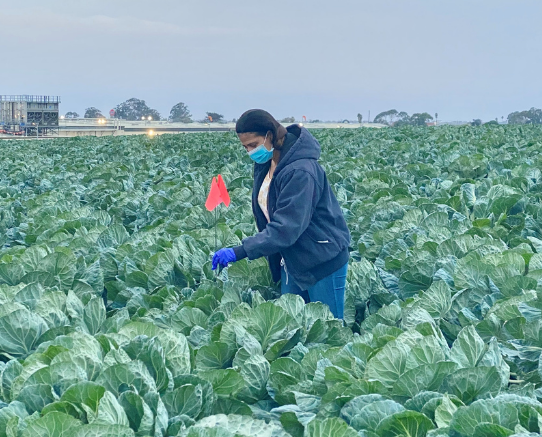
Field selection is the first step in the process of growing a crop. Adjacent land use, land and crop history, topography, availability of clean water and soil type all play an important role in farming. A detailed risk assessment is performed before any Ocean Mist Farms crops are planted.

Manure is not used as a soil amendment in the growing of any of our crops. A clean water source is verified through routine testing by an independent third-party laboratory.

During cultivation, our employees follow good hygiene practices and make sure all equipment used in the process is clean and well maintained. Employees are trained in food safety and required to follow Good Agricultural Practices. We perform continuous internal audits and seasonal, third-party audits to ensure the goals of the food safety program are achieved.

Integrated Pest Management
This is a necessary aspect of all agriculture. We are diligent in monitoring insects and weeds and minimize the use of pesticides. All pesticide applications are made in accordance with local, state, and federal laws and regulations. Many of our crops are tested for pesticide residues by a third party laboratory.

Our field professionals are all licensed Pest Control Advisors (PCAs) by the California Department of Pesticide Regulation. Our PCAs use a variety of techniques to control the variety of pests that can damage our crops. Integrated Pest Management (IPM) is a pest-control strategy that uses biological controls (like lady bugs), monitoring (using traps and field counts), habitat manipulation (flower plantings that attract beneficial insects) and weed clearing. We use pesticides only after monitoring suggests they are needed to control target organisms. Pest control materials are selected and applied in a manner that minimizes risk to human health, beneficial insects, other wildlife in the area and the environment.

Harvesting
All our harvest operations are conducted under the Good Agricultural Practices. Training is provided to all personnel in worker health and hygiene, proper hand washing, prevention of cross contamination, and food security. Clean toilet facilities are provided and field management pay close attention to field sanitation and employee practices.

Ocean Mist Quality Assurance

Known for high-quality product, Ocean Mist Farms has a unique and methodical approach to Quality Assurance that provides our customers with a consistent level of premium product year-round. Our dedicated team of experts applies their strict expectations through the entire production chain, from field to the cooling process. The Ocean Mist Quality Assurance program entails a three-step process of measuring, verifying and enforcing in-house product specifications for all Ocean Mist brand products that meet or exceed USDA quality standards.

Ocean Mist quality standards are enforced at five levels of the production chain:

  • Grower
  • Harvesting Manager
  • Crew Supervisor
  • Crew Foreman
  • Quality Assurance Inspector
With this comprehensive approach of superior standards, Ocean Mist Farms is able to deliver the top quality product that has become our reputation.

Product Traceability
Tracing product back to its source is an integral part of Ocean Mist Farms’ food-safety program. Our trace back system allows us to keep an accurate inventory and to trace product back not only to the specific lot on a ranch, but also to the individual responsible for packing the product into the carton.

Processing
Good Manufacturing Practices (GMP) and Hazard Analysis Critical Control Points (HACCP) are applied to our processing operations. All our employees are well trained in GMP/HACCP and follow good hygiene practices. Our facilities and equipment are subject to rigorous sanitation protocols on a daily basis. Verification of these sanitation procedures is conducted through our Environmental Monitoring Program, which utilizes visual inspections, rapid detection (ATP) and other methods to ensure equipment is clean before production starts. Our Preventative Maintenance Program, Integrated Pest Management Program and Employee Education Program are just a few other programs that help us produce a top quality, safe and wholesome product.

Farming & Post-Harvest Practices Warehouse Shot

Cooling
Keeping fresh vegetables cold is key to quality as well as safety. We call this process the “cold chain” and monitor every link of that chain, from field to truck. Our policy is to move produce from field to cooler within four hours after it is harvested. We then cool the produce by the best method appropriate for each individual crop.

After the vegetables are cooled, they are moved into our state-of-the-art cold rooms, which are held at an average of 34°F to keep the products fresh. The cold rooms are maintained in a clean and ready state. Each room has alarms to notify us, should the temperature rise.

We follow the practice of first in, first out (FIFO). Our products move quickly out of the cold rooms to supermarkets and distribution centers. Should product remain in cold storage for more than five days or not meet our quality standards, it is either donated or dumped. Computer-generated aging reports are available to our sales staff at all times.

Personal sanitation and hygiene is essential in the cooler. Everyone in the cooler, including inspectors, is required to wear disposable gloves before handling any product.

We keep the cooling facilities clean and pest free. We even use electric forklifts, so we won’t have exhaust fumes in our coolers.

All equipment is monitored and inspected on a regular basis. Only potable water is used for product cooling.

Transportation
With the exception of some air deliveries, our products move to distribution centers and supermarkets in refrigerated trucks. We inspect the trailers before we allow our products to be loaded. In fact, we will not load trailers that don’t meet our temperature requirements or have any signs of contamination.


GAP Highlights/
Summary
Farming & Post-Harvest Practices
 
Search Site   |   Contact Us   |   Terms & Conditions   |   Privacy Policy   |   Subscribe   |   Site Map   |   Club Login   |   OMF Employee Login
© Copyright Ocean Mist Farms 2010